
While sun bears (Helarctos malayanus) can be found across Malaysia, Indonesia, Thailand, and Laos, a sub group, the Bornean sun bear (Helarctos malayanus euryspilus) is found only in Borneo. One of the best places to see them is at the Bornean Sun Bear Conservation Centre (BSBCC) in Sepilok, Sabah (Malaysian Borneo). The centre, founded by Dr (Hon) Wong Siew Te, in 2008, is a dedicated rescue and rehabilitation facility located beside the Sepilok Orangutan Rehabilitation Centre, a 30-minute drive from Sandakan. We visited the centre recently as guests of the Malaysian Palm Oil Green Conservation Foundation (MPOGCF), supports the implementation of the Tabin Sun Bear Project (TSBP) led by the Bornean Sun Bear Conservation Centre.
What’s special about a Bornean sun bear
The Bornean sun bear is usually recognised as a subspecies, Helarctos malayanus euryspilus, rather than a separate species and found only on the island of Borneo, this subspecies has a smaller skull than the Malayan sun bear. BSBCC’s genetic research uses DNA to better understand the relationships between sun bear populations and to develop non-invasive methods for detecting and monitoring individual bears in the wild.
Bornean Sun Bear Conservation Centre
Jalan Sepilok,
Batu 14,
Sandakan
Phone: +6089-534491
WhatsApp: +6011-53771256
email: [email protected]
You can also check out their Website and follow them on Instagram and YouTube.
It’s very difficult to get an accurate population count for the sun bears because of difficulties tracking them in dense tropical forests. Even estimates of fewer than 10,000 living in the wild may be over generous with some suggestions the number could be much lower. Sun bears look for honey and termites in hollowed out holes in trees, and one of the innovative methods to collect evidence we heard of, involves wrapping a tree below the hole, with inside out duct tape, to collect hairs from the coat as they rub against it. The DNA profile can then identify new or returning individuals.
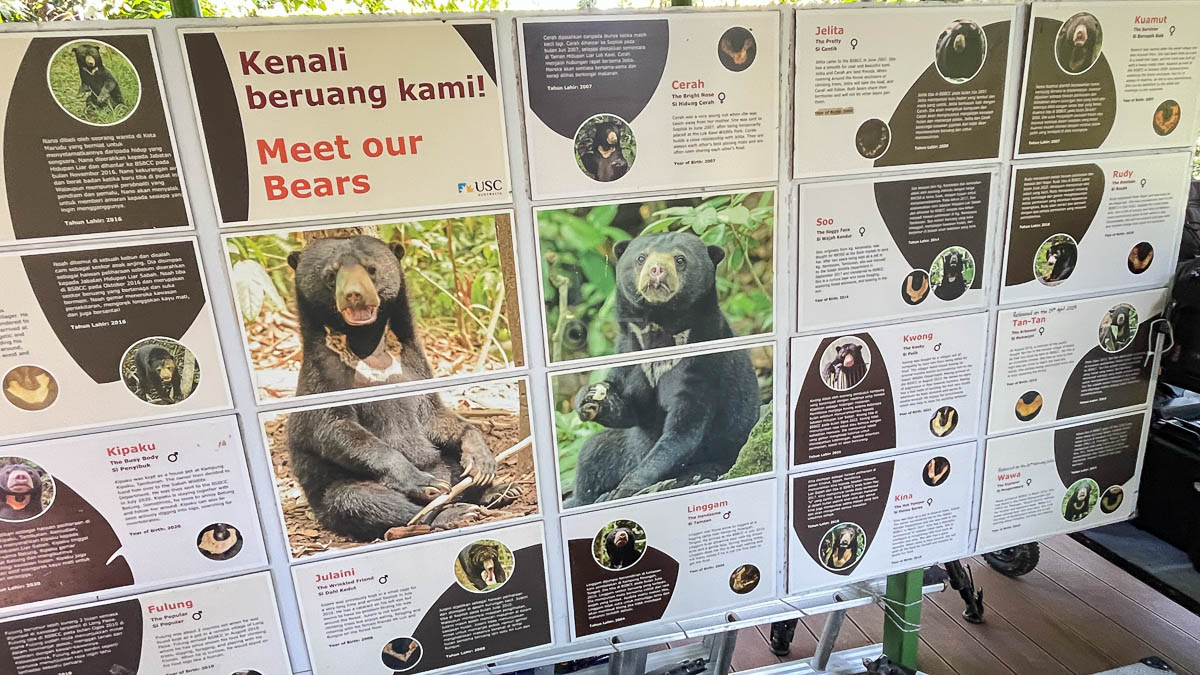
There are currently 42 rescued or ex-captive sun bears living at the BSBCC, with another three juveniles at their camp in Tabin Wildlife Reserve, north east of Lahad Datu. The centre includes large forest enclosures, providing a natural environment suited to the needs and welfare of the sun bears and helps to facilitate their rehabilitation back into the wild. The Centre opened to the public in 2014,. As you observe the sun bears in their natural habitat, you can ask about them as staff are ever willing to share their stories. All the bears have distinct personalities. Like Joe, who rescued from a fire, spent time with humans before he was brought to the centre. Or Fulang, who arrived with bad scratches on his back and discovered that enjoyed the vet’s attention. Now he finds ways to ‘hurt’ himself (a little bit) to get attention. ** Keeping protected wildlife species in Malaysia requires a strict special permit or license from the government, and unauthorized ownership is illegal.
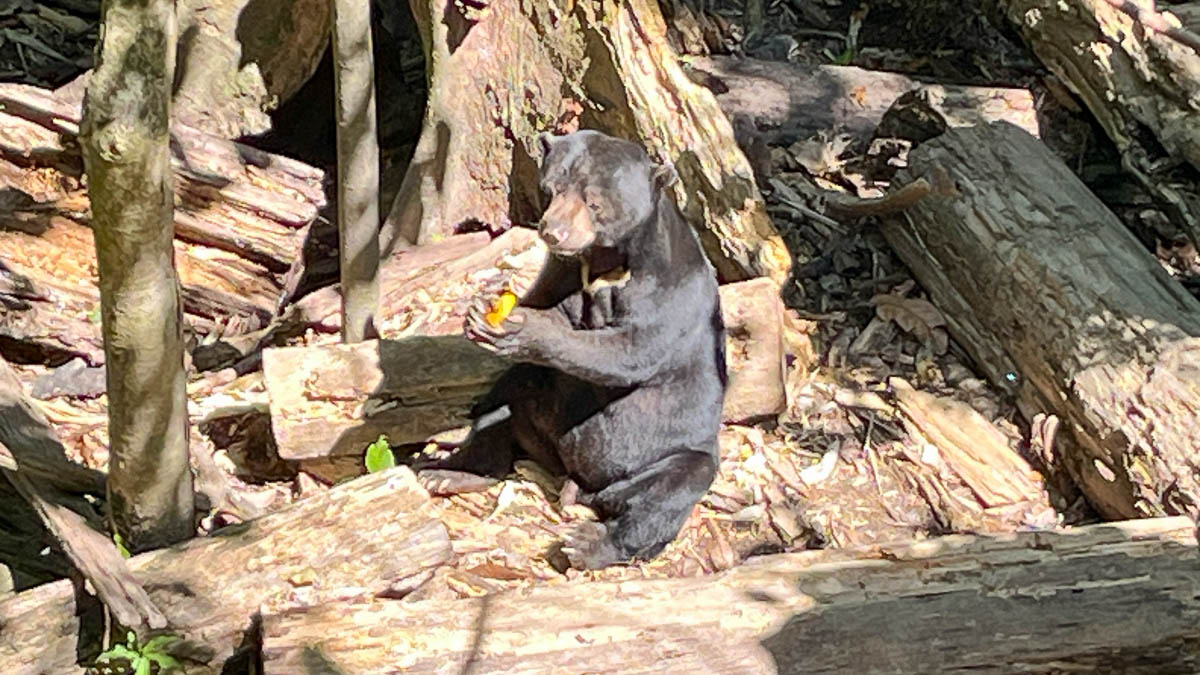
Fun Facts about sun bears
Their common name does not derive from the golden collar on their chest, but it was named for a specimen collected near the equator (near the “hot sun”) on Borneo.
Their scientific name has an extra part as they are a sub-species. This extra name euryspilus, means “wide birthmark”, referring to the prominent golden mark on the chest.
- Sun bears are excellent climbers, their long claws are very helpful.
- Sun bears have extremely long tongues, they may be up to 25cm and the longest tongue of any bear species.
- Their long tongue is very helpful when they’re sucking out honey from beehives and makes it easier to extract ants, termites, and grubs from deep inside tree bark.
- They’re known by some as ‘honey bears’ because of their love of honey, which they can get from honey bee hives high in jungle trees.
- They also look for honey produced by stingless bees Tualang, (or kelulut) which make their nests in hollow spaces in trees.
- As the bears dig for the honey, or termites in fallen logs, they enlarge the space, making a cavity that can be used by birds and other jungle wildlife as a nest. They are ‘jungle engineers’.
- Contrary to what some people believe, they are not related to squirrels. Sun bears are mammals, while squirrels are rodents.
- Unlike some types of bears, they rarely attack people. But those claws would make a mess if they did.
Our thanks go to Fatin Amirah from MPOGCF and Daniel Pamin, Sun bear researcher, for their input and sources of accurate information.
Over the road, the Orangutan Rehabilitation Centre
Malaysian Palm Oil Green Conservation Foundation (MPOGCF) also supports the Sepilok Orangutan Rehabilitation Centre, just over the road from the Bornean Sun Bear Conservation Centre. MPOGCF was established by the plantation industry and with government funding, MPOGCF funds hands-on conservation, habitat tree-planting, and public engagement events like the Orangutan Fun Walk directly at Sepilok. The Orangutan Rehabilitation Centre is owned and run by the Sabah Wildlife Department, located in the Sepilok-Kabili Forest Reserve, which covers an area of 43 sq km. Facilities include a clinic, treatment ward and nurseries. Contact them through their official website HERE.
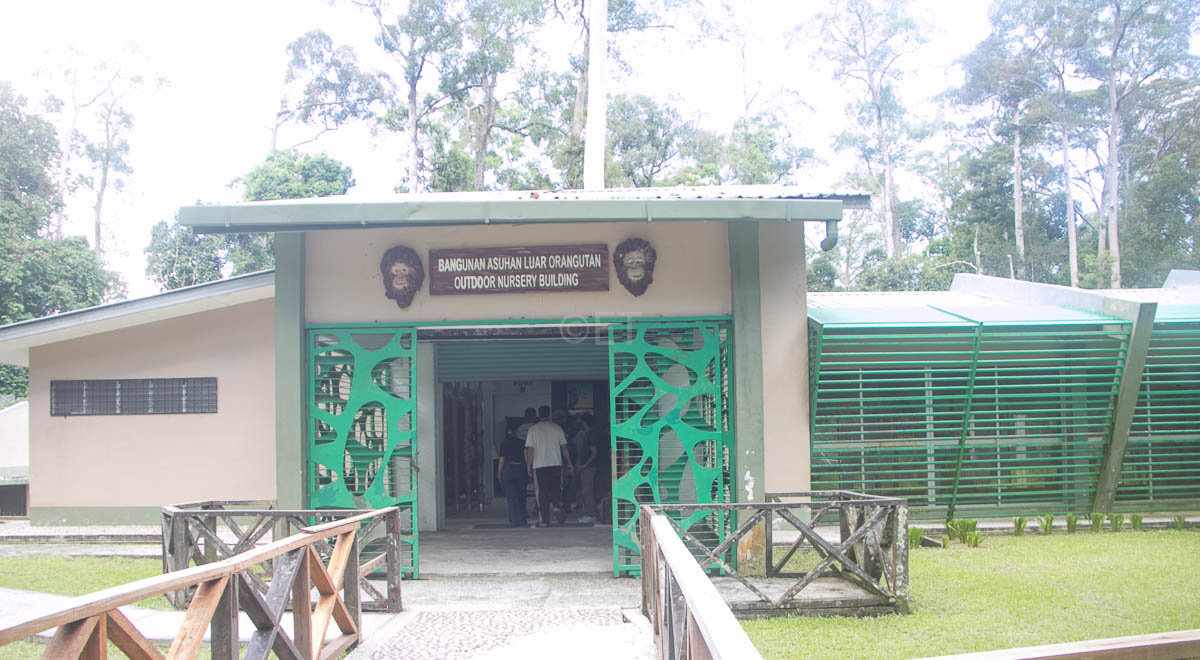
This writer first visited the Centre in 2009, when only the outdoor feeding platforms were available for feeding the orangutan. In the years since, the facility has been extended, with areas for learning and presentations. Who turns up for mealtime is completely variable, as the Bornean orangutans (Pongo pygmaeus) live freely in the jungle and can come and go as they please. There’s no gift shop on your way out, but they do have a small shop with cooked food and snacks available, including drinks and ice cream.
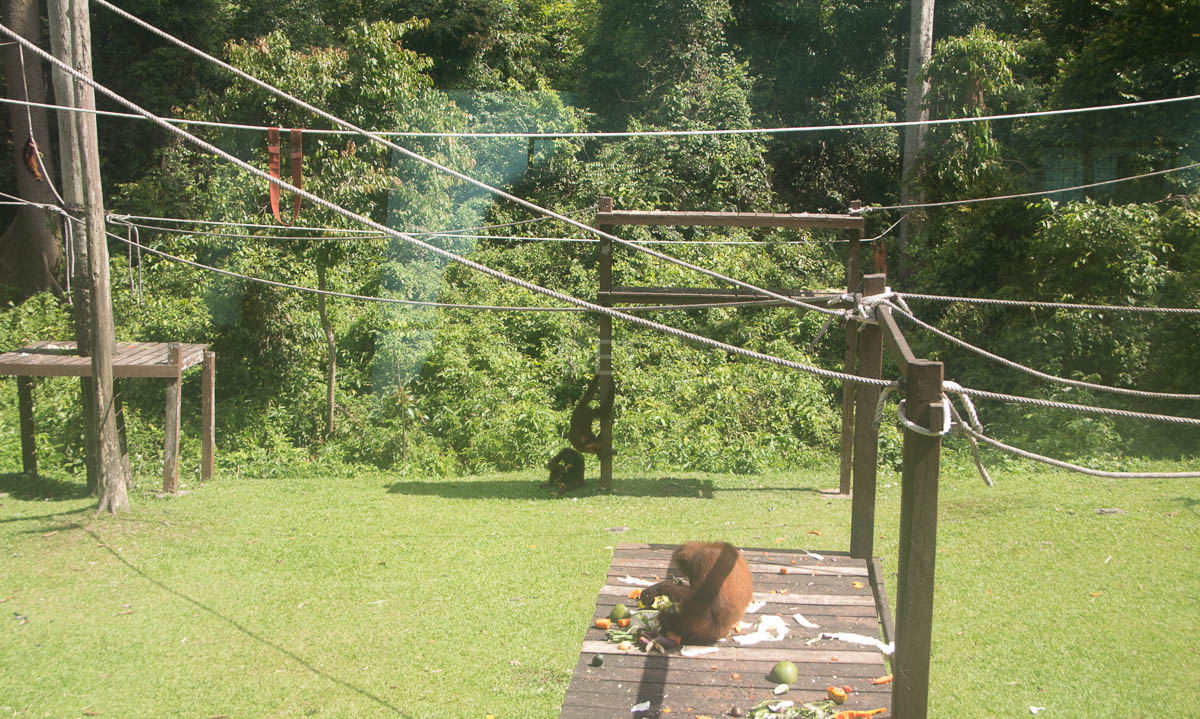
Today around 60 to 80 orangutans live independently in the rainforest reserve and approximately 25 orphaned orangutans are housed and cared for in the nurseries. The nurseries aren’t open to the public, but the building has a large airconditioned viewing gallery when you can observe the free-living orangutan come and go, as well as interact with each other, without distracting or disturbing them. Like the original area, the glassed in space lets you observe the orangutans as they interact in ways that look very familiar, including the mum-to-be, lying flat out and fed up as she enjoys her pregnancy. Or the embarrassment of the vanquished, the cheeky behaviour of the fellow taunting his friend, or the way the mother shoves some food over to her baby for him to ‘do it himself’.
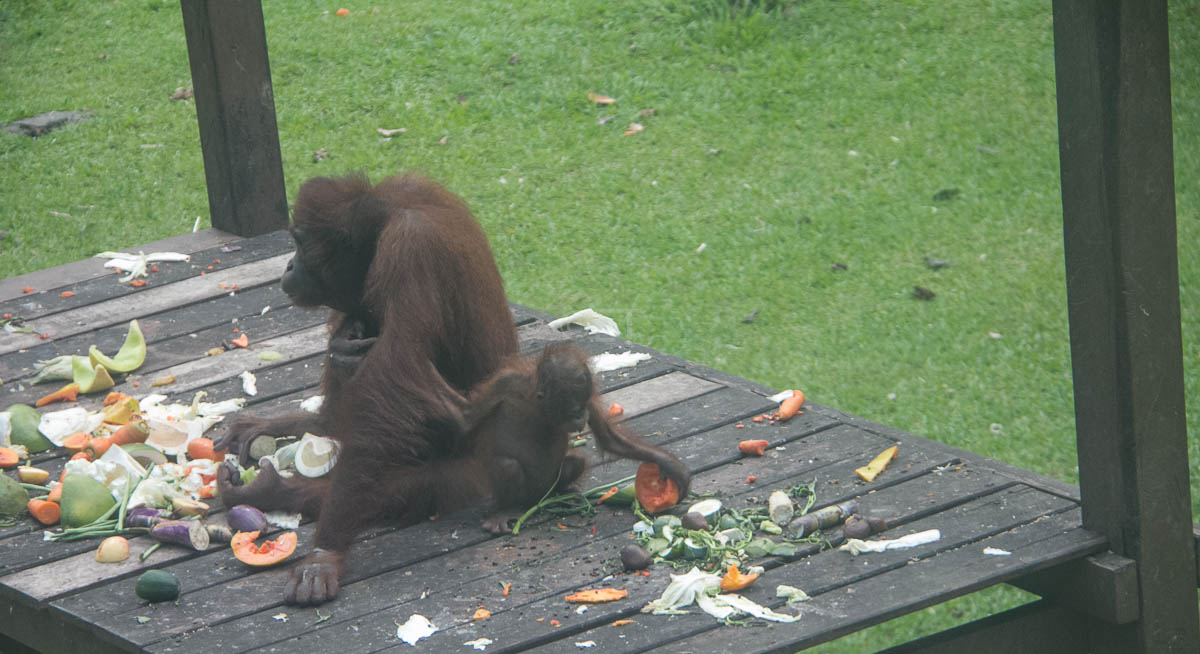
Both these facilities are well run and welcome visitors, while putting their charges first. We’d happily return on any future visits to Sabah and suggest you allow at least a full day for your visit. Check their websites for ticketing information.
images©ET





This Post Has 0 Comments