
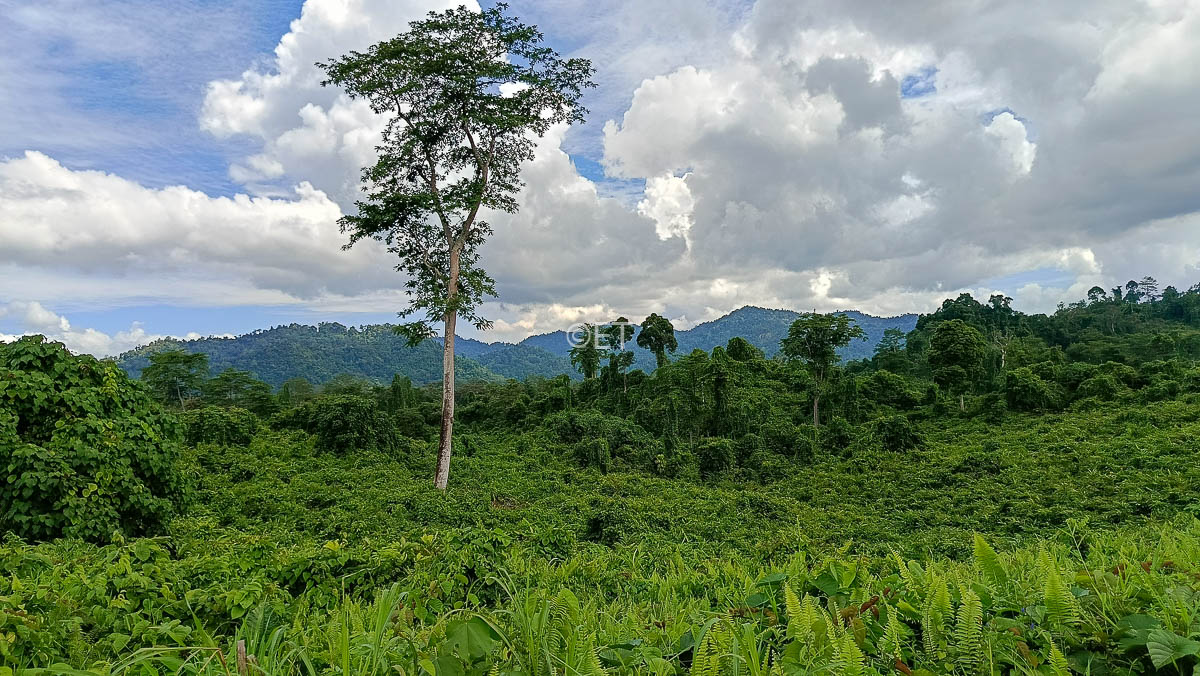
There used to be lots of orangutan in the Ulu Segama-Malua Class 1 Protected Forest Reserve in the Lower Kawag area near Lahad Datu in Sabah, Malaysia. This is close to the Danum River and the Danum Valley, which is a protected Conservation Area to the west of the Forest Reserve we were visiting. There’s plenty of other wildlife in the area, we saw evidence of elephants – their droppings are hard to miss – and there are plenty of birds including hornbills. But the forest in this area is severely degraded due to past logging activities from the 1980s, compounded by major fires during El Niño events in 1983 and again in 1997/98. Forest rehabilitation is needed in this area of around 2500 hectares to restore the landscape and habitats of endangered species which make the forest their home.
Why Forest rehabilitation?
The first thing you’ll notice is that the degraded area looks green and lush, but you don’t have to look hard to see that the vegetation is mostly low growing ground cover, bushes and smaller trees. It’s not easy to walk through without chopping a path as you go as the loss of forest trees allows generalist species and invasive plants to flourish. There are very few tall trees, but the few there are, show easily the area that has been damaged. In a healthy forest, the area below the canopy is the ‘understory’, which is warm, humid, and dimly lit. It’s relatively open and easier for animals, including humans, to walk through. The upper layers trap moisture keeping the air damp, warm and still. The ten year forest rehabilitation project between 2019 and 2029 is being implemented by the Sabah Forestry Department (SFD) and Malaysian Palm Oil Green Conservation Foundation (MPOGCF). This collaboration is one of a number of projects in Sabah supported by MPOGCF, who list their aims on their website as:
1) Encourage and support conservation initiatives and sustainable practices within the palm oil industry
2) Initiate and support reforestation programs of degraded forests
3) Provide funding assistance for wildlife and biodiversity research
4) Provide funding for conservation activities including related promotional activities and awareness programs
You can get more information on the Sabah Forestry Department Website or Facebook and check out their Forestry Dept project website for more detailed information on this project.
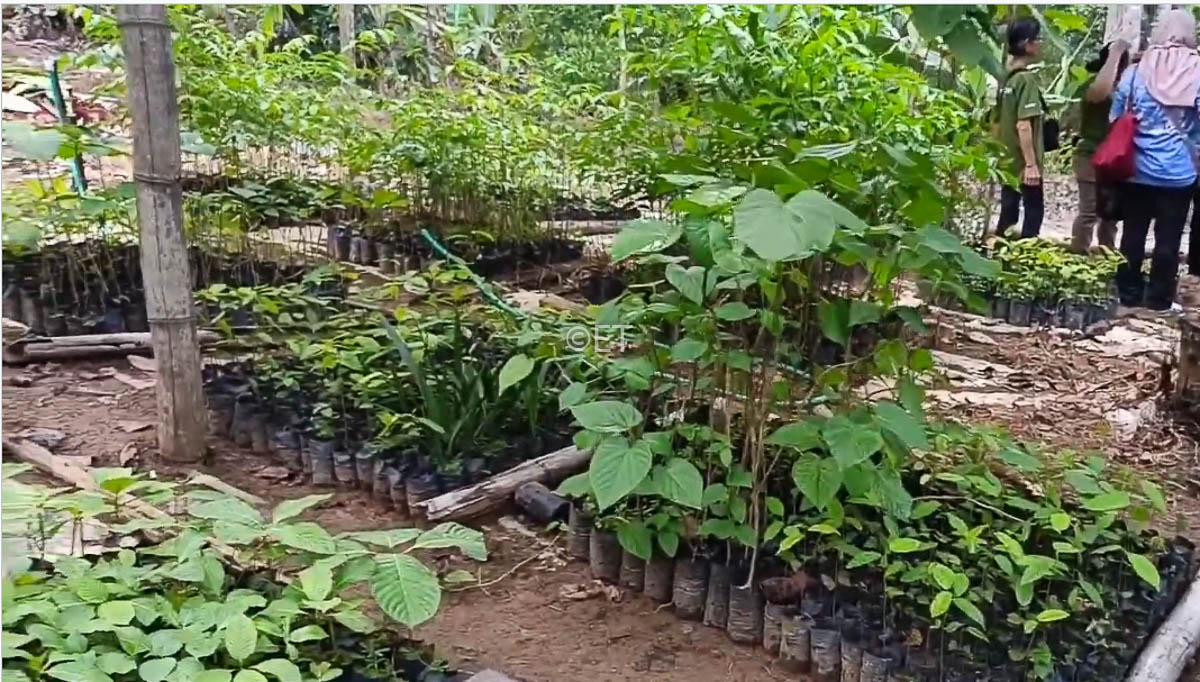
What the project is doing, is to return the jungle to its natural state, where tall trees exist in their natural layers and takes many years to become fully mature. The project seeks to do this in stages within each phase. First, fast growing softwood trees are planted, which quickly form a canopy which can protect the young hardwood saplings which are then planted underneath. The saplings are sourced from the forest tree nursery of Kampung Tampenau, which we passed on the way into the protected area. In the first 6 years of the project, they have supplied over 100,000 saplings to the Forestry Department.
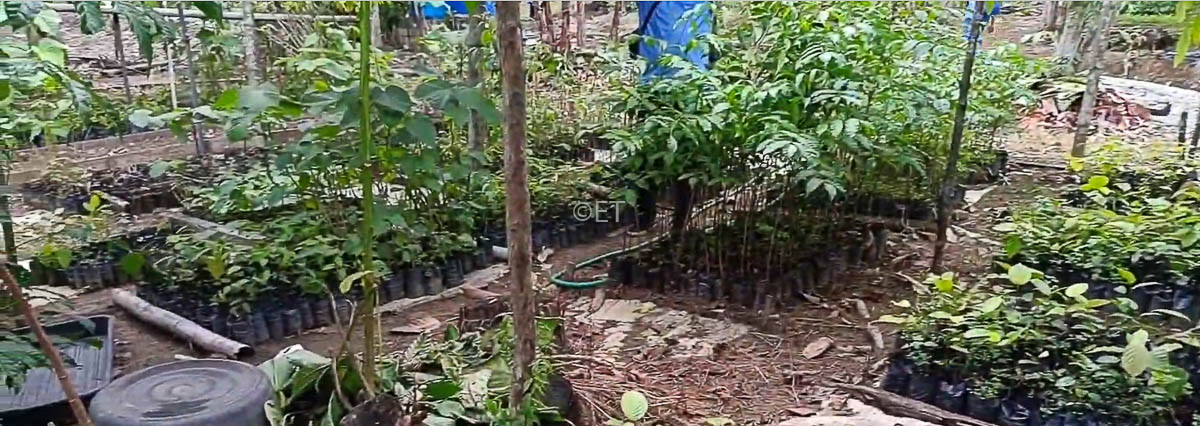
Phase 2 of the project is well underway and it is here that we had the opportunity to plant different hardwood species, prepared ready for us. Lessons learnt in Phase One have been applied to Phase two, including protection of the young trees. Elephants roam in herds across the area and damage young trees, so the use of electric fences in Phase Two has helped considerably.
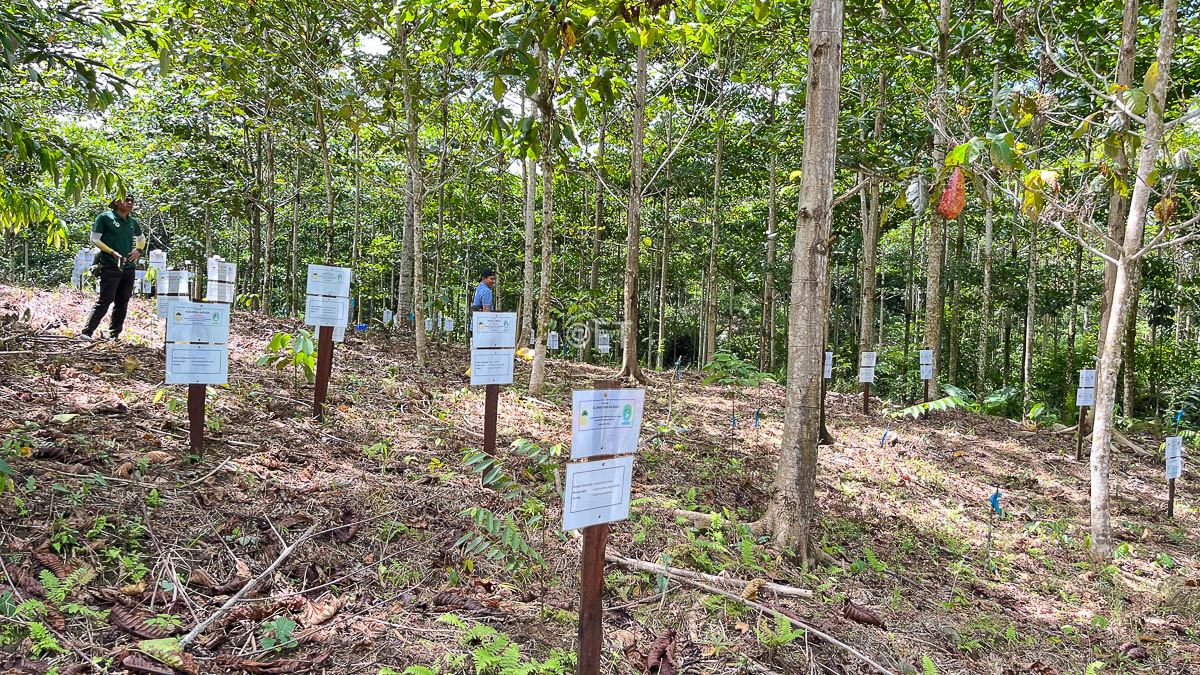
Highly favoured are Dipterocarp trees (Dipterocarpaceae), a major family of tall tropical hardwoods which can grow to between 40 and 70 meters tall with straight trunks, winged seeds, and valuable timber. Well known examples include Red and Yellow Meranti, Chengal, Balau, and Kapur, though not all are native to Sabah and not included in this project.
Birdwatchers are welcome
Eight of the ten species of Hornbill found in Malaysia are found in Sabah and all have been sighted in this area. In addition, you can see the endemic Bornean ground cuckoo (Carpococcyx radiceus) a large type of cuckoo in the family Cuculidae. It prefers to spend time on the ground. You can also see three or four types of Pitta endemic to parts of Brunei, Malaysia, and Indonesia. They prefer to live in humid forest areas. To visit, you will have to be part of a formal birdwatching group and apply through the forestry department.



This Post Has 0 Comments